Software for a working trim floor — QR totes, a weigh station the crew will actually use, and the labour numbers behind every pound.
Built on a processing floor that runs several facilities, for the way the work really happens: trays on a scale, boxes on a pallet, and a supervisor who would rather write it on paper.
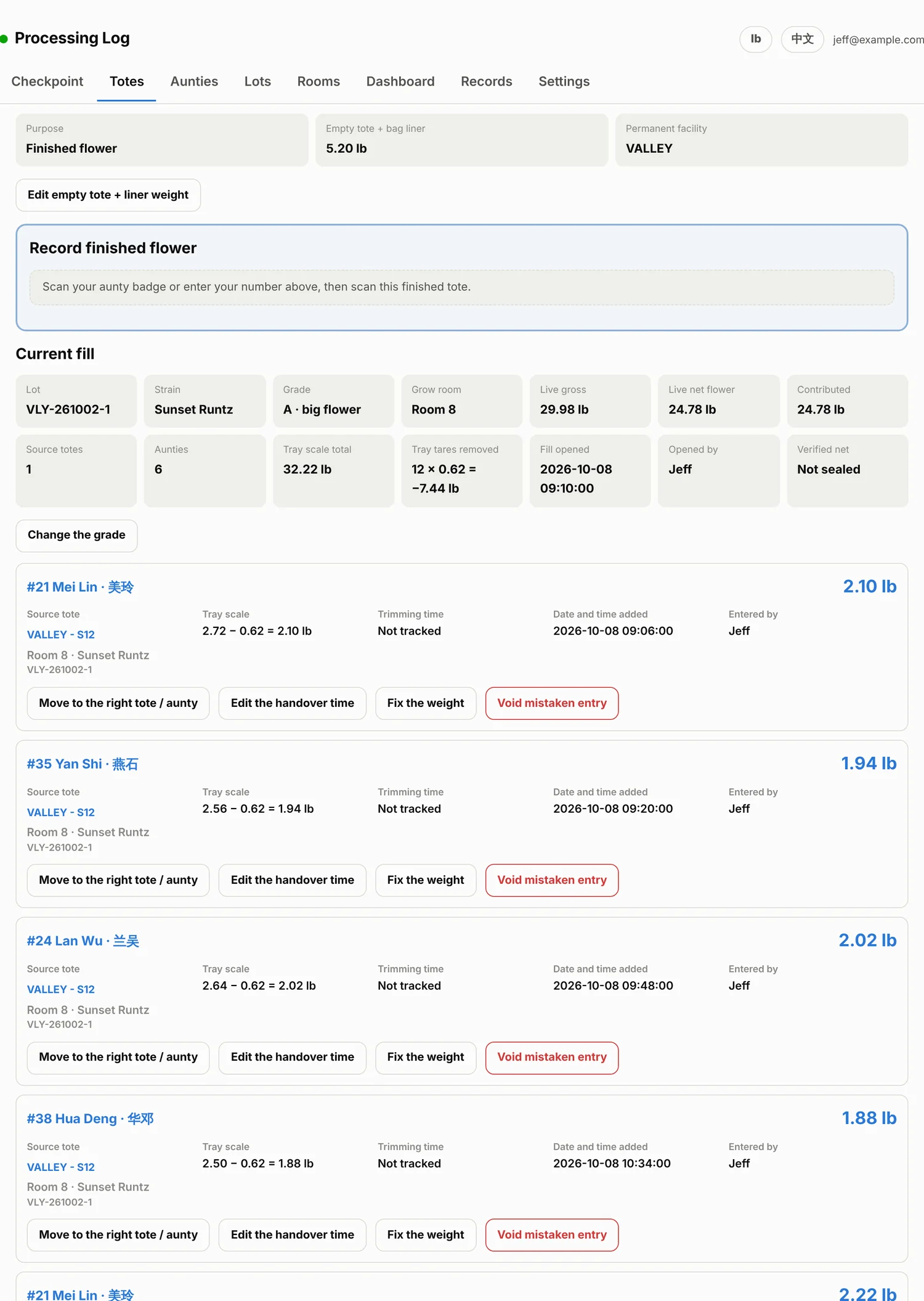
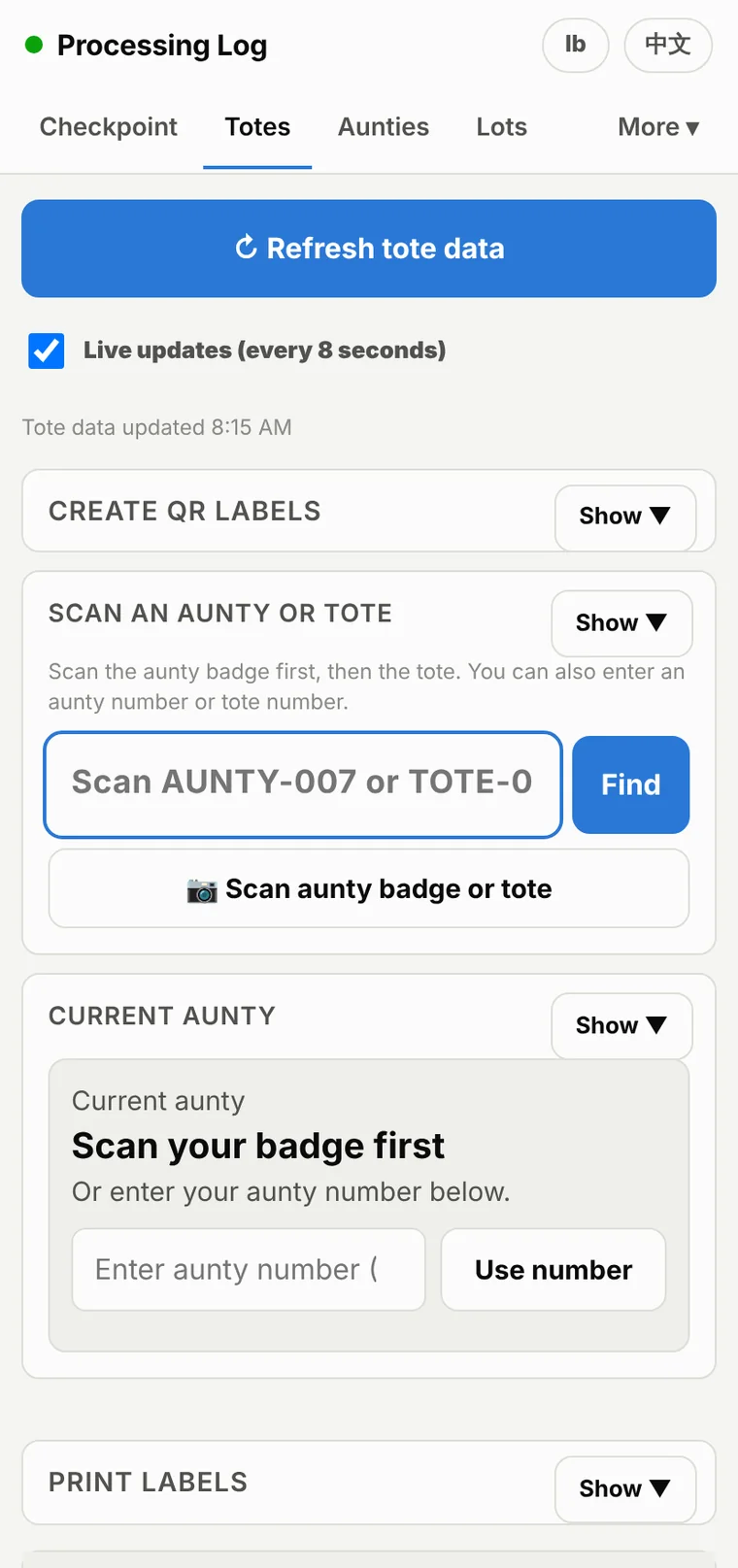
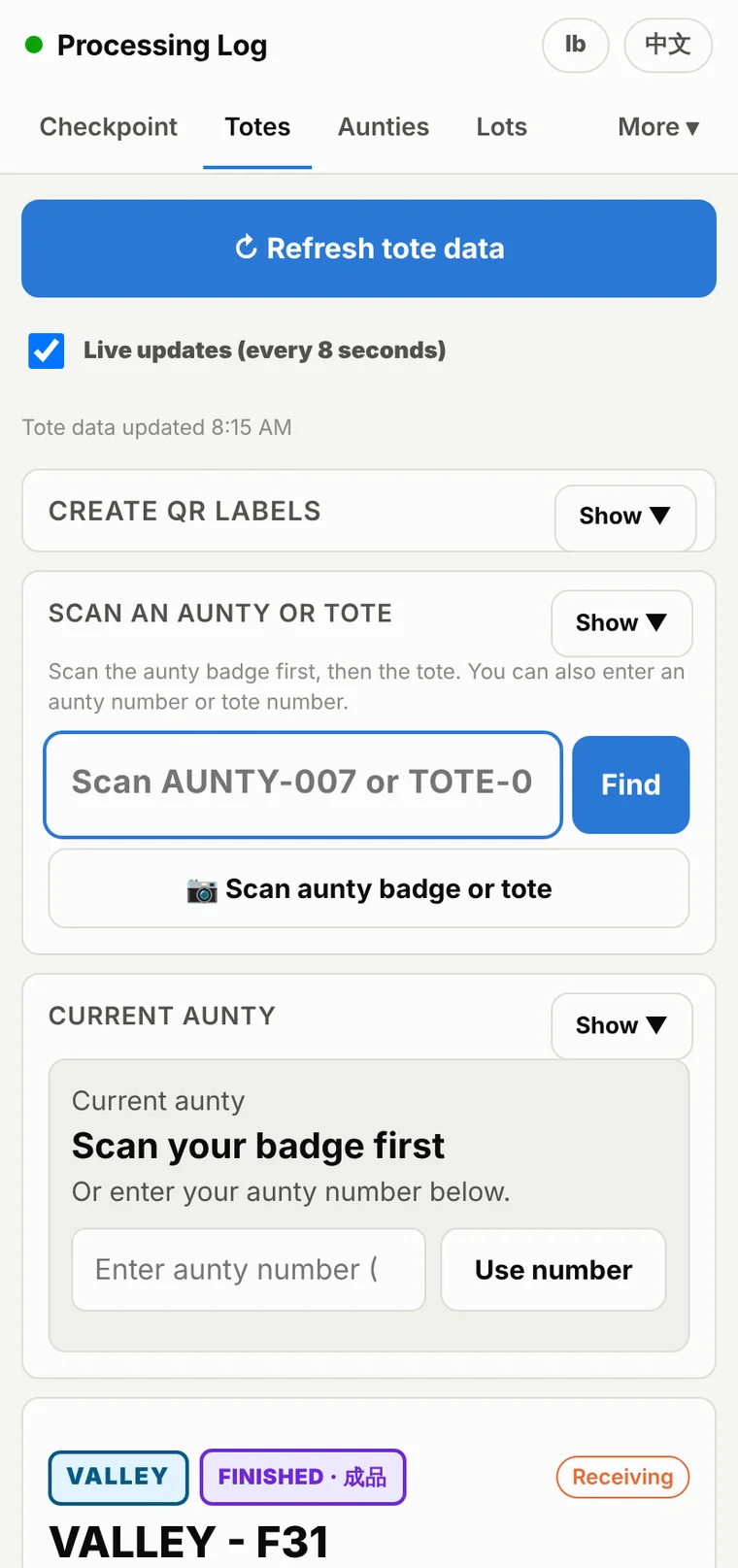
Scan the auntie's badge, scan the tote, type what the scale says. The tray tare comes off by itself and the entry is credited to her before she walks away.
It saves the moment it is typed and uploads behind the scenes, so a weak signal in a metal building never holds up the line. A duplicate reading from the same person within a few minutes is caught before it becomes a second entry.
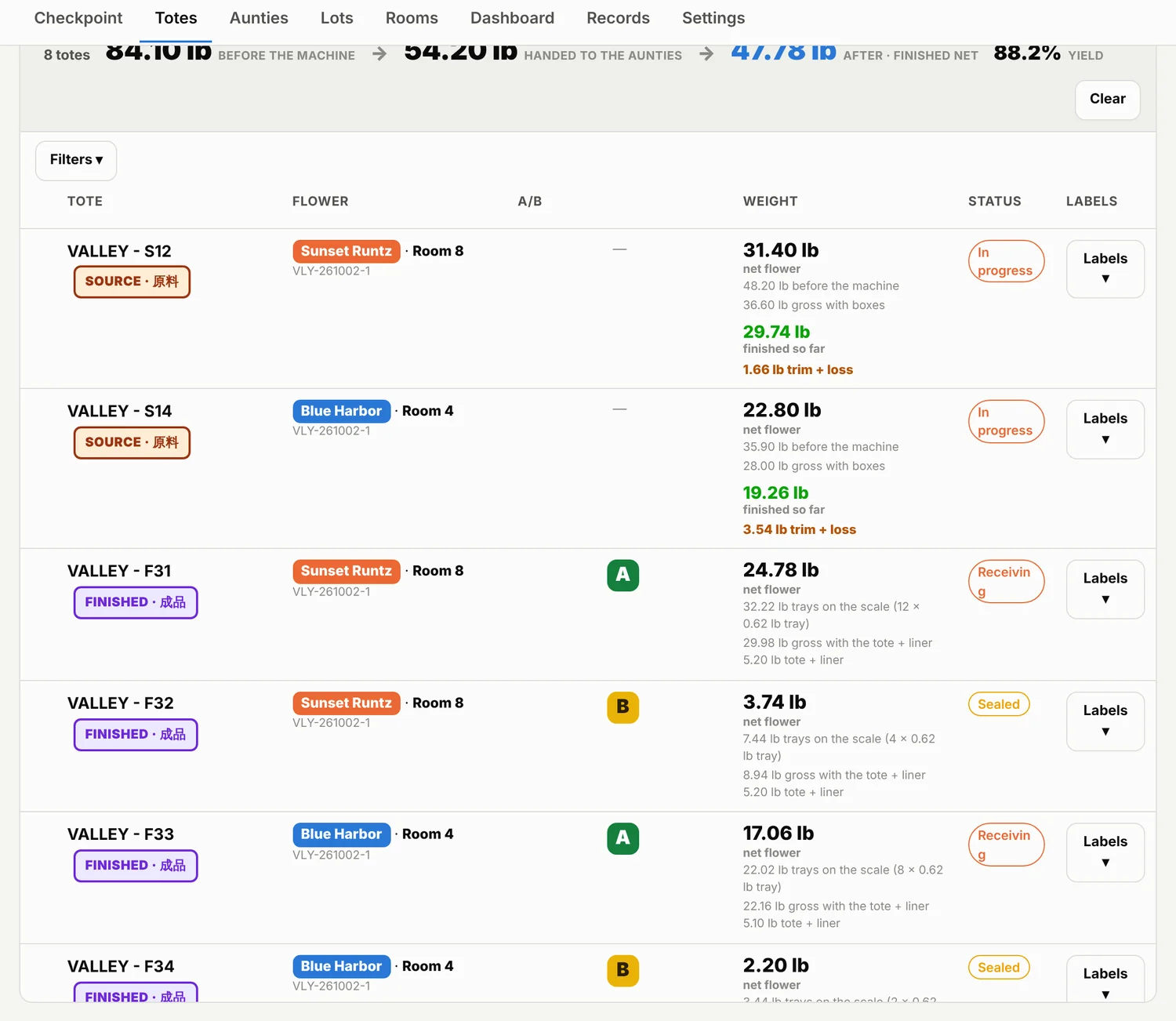
Source totes hold one room and one strain. Finished totes hold one lot, one strain and one grade. Scan either one and you get its whole history: what went in, who put it there, and what it weighs now.
Big flower and small flower stay separate the whole way through, in green and yellow. A tray that went into the wrong tote gets moved to the right one — not deleted, not re-typed, and the auntie keeps the credit.
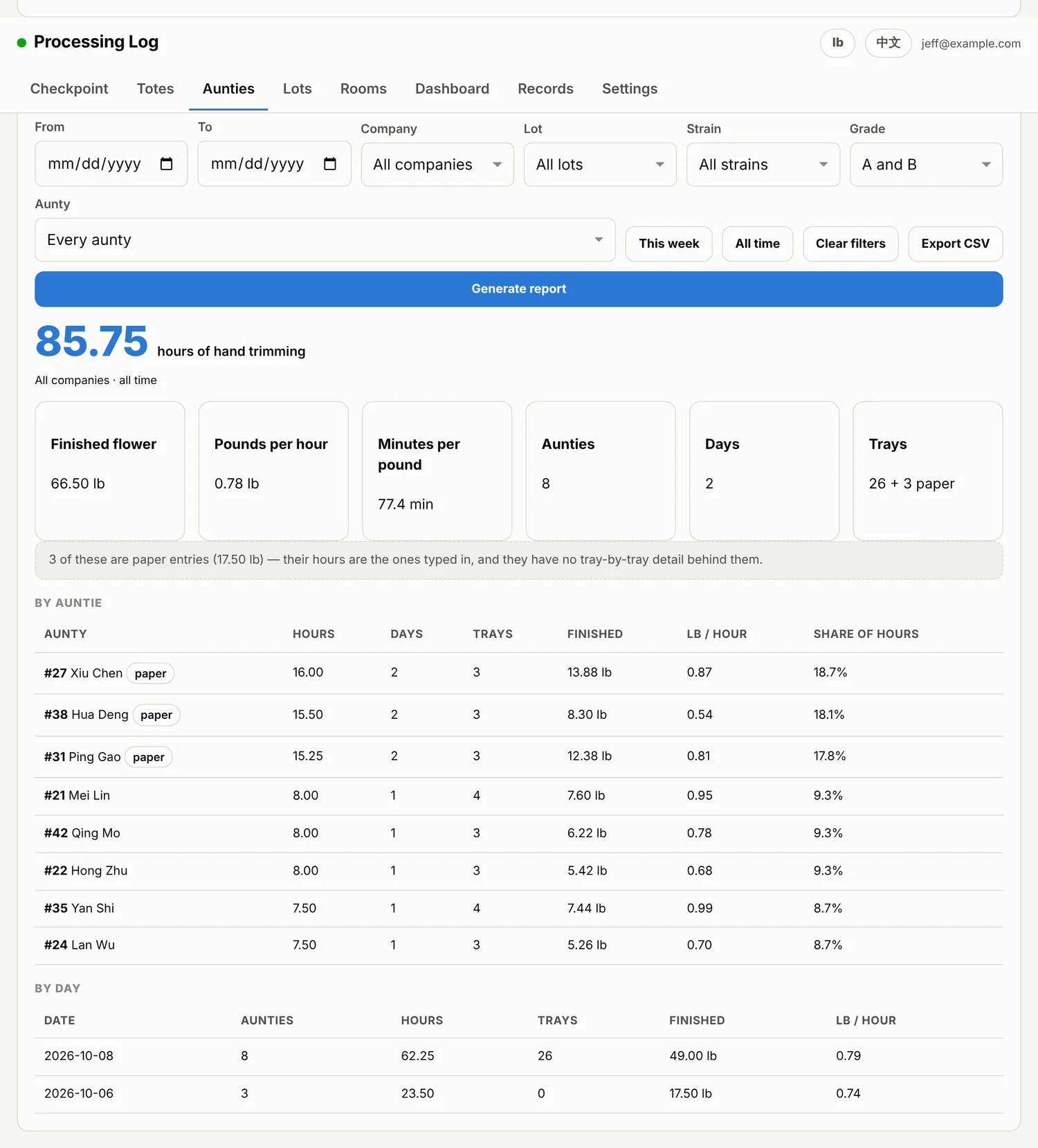
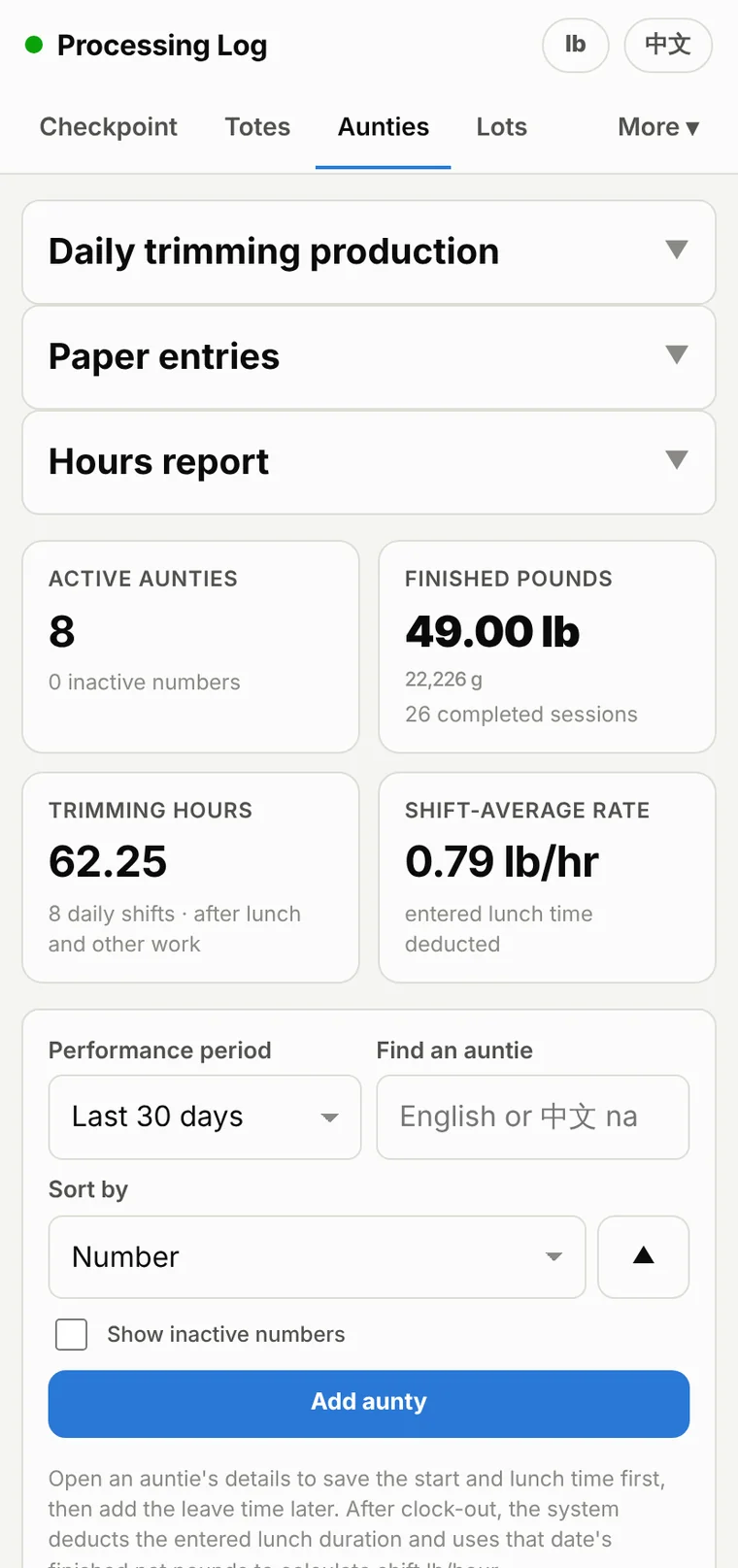
Shift times turn into trimming hours on their own. Then filter by company, lot, strain, grade or one person and the report tells you the hours, the pounds and the pounds per hour behind exactly that flower.
A day someone split between two clients is shared out by that day's pounds, and the report says so instead of hiding it. Export to CSV, or generate a printable sheet with the filters spelled out at the top — the version you hand to a client or to payroll.
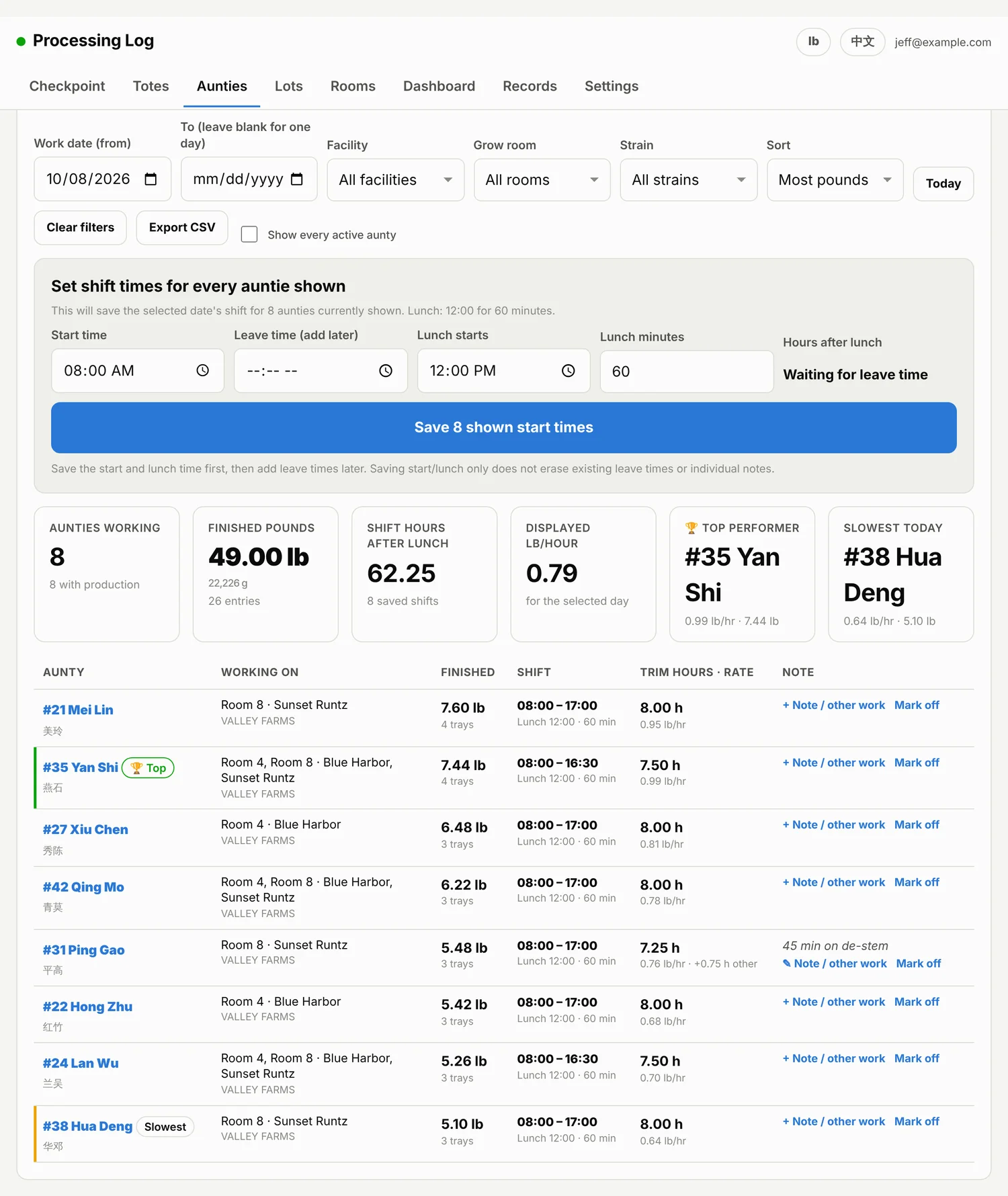
One screen for the day: who was in, their start, lunch and leave times, what each of them turned in, and their pounds per hour.
Set the whole crew's shift in one go, fix a time that was written on paper and typed in late, and mark the people who were out.
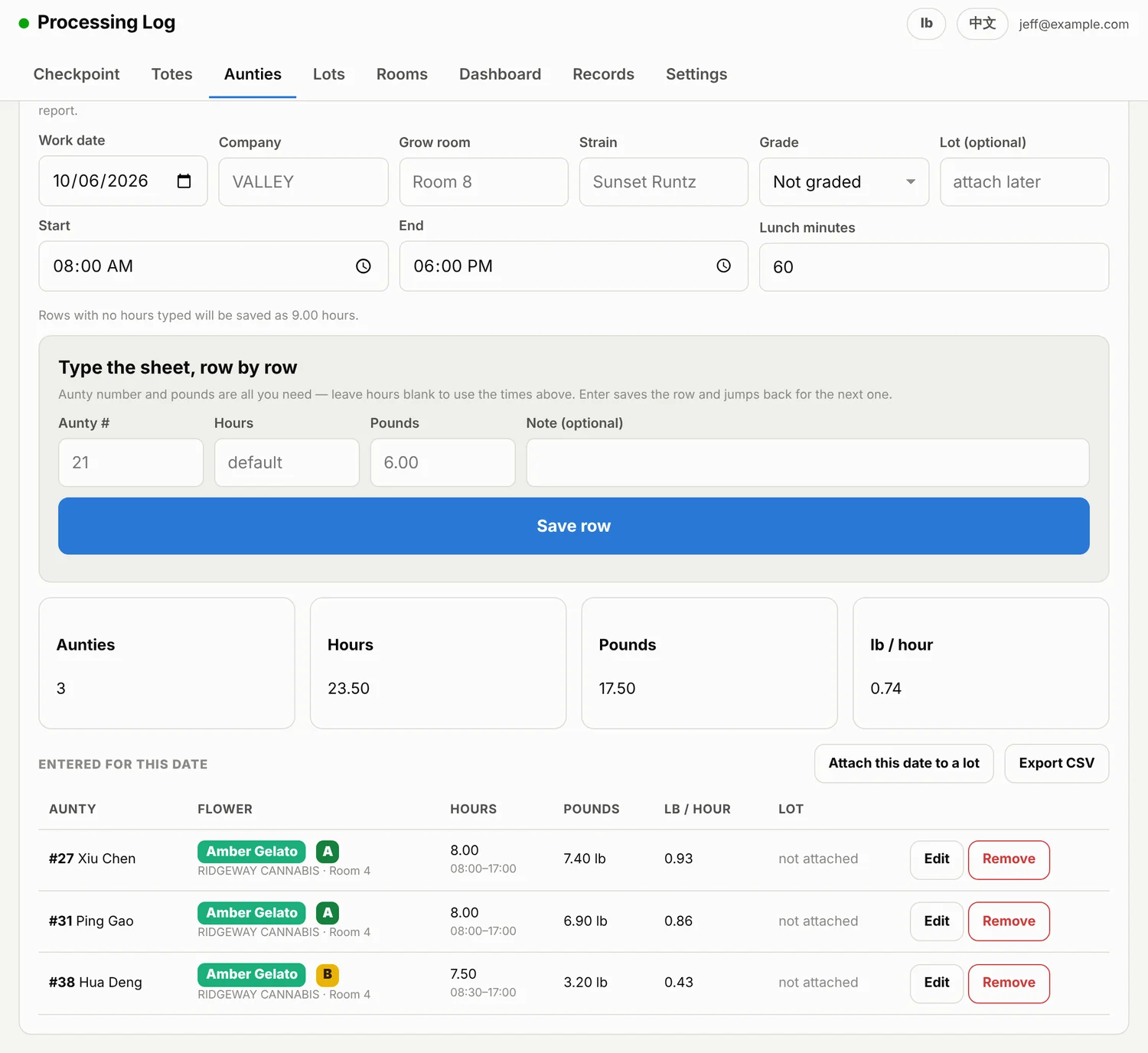
Not every supervisor is going to use an app, and that should not cost you the numbers. When one hands in a sheet, type it straight in: number, hours, pounds.
No trays, no totes and no lot required — a lot can be attached afterwards, once it exists. Those rows count in the reports next to everything that was scanned, and they are labelled so you always know which is which.
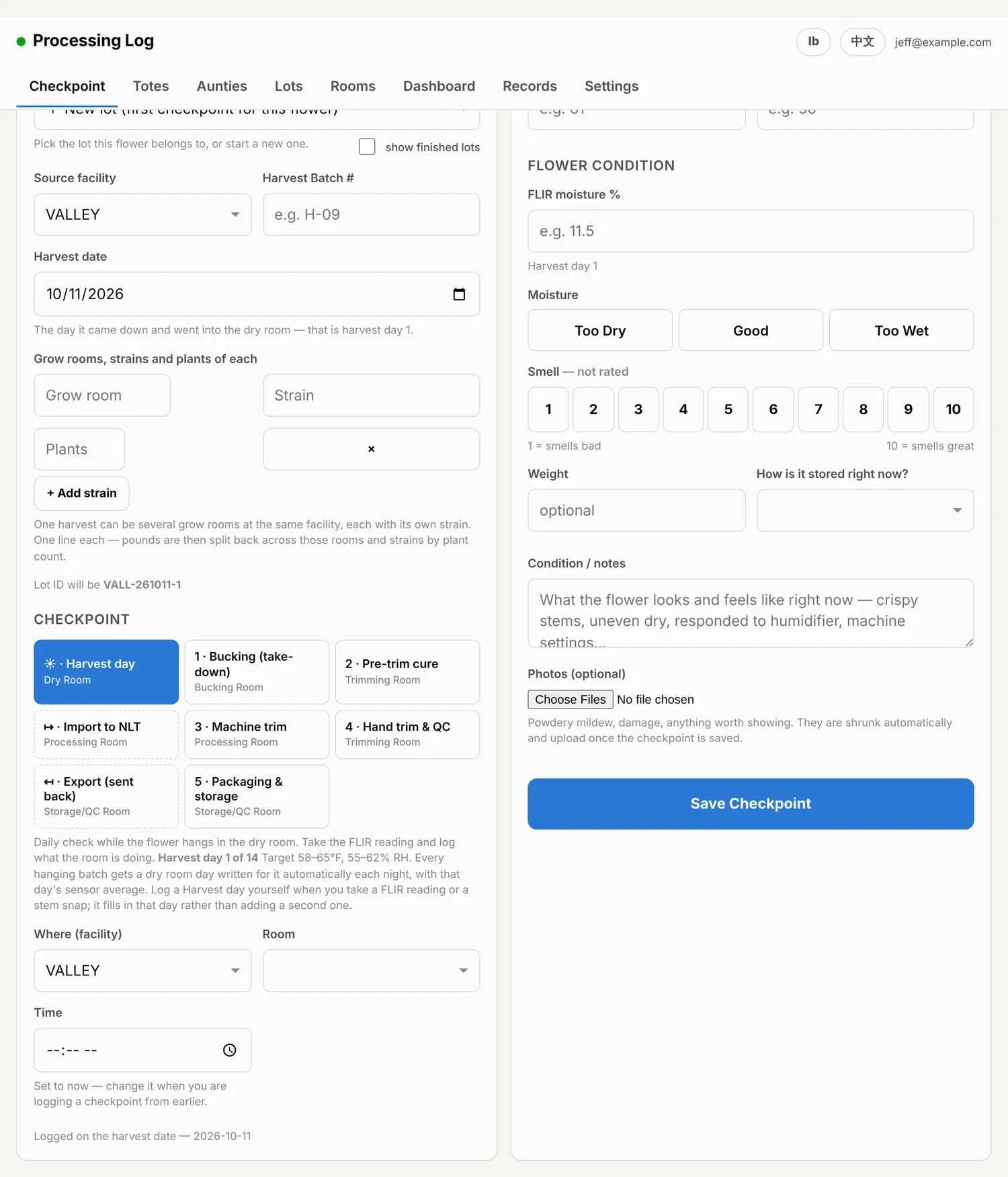
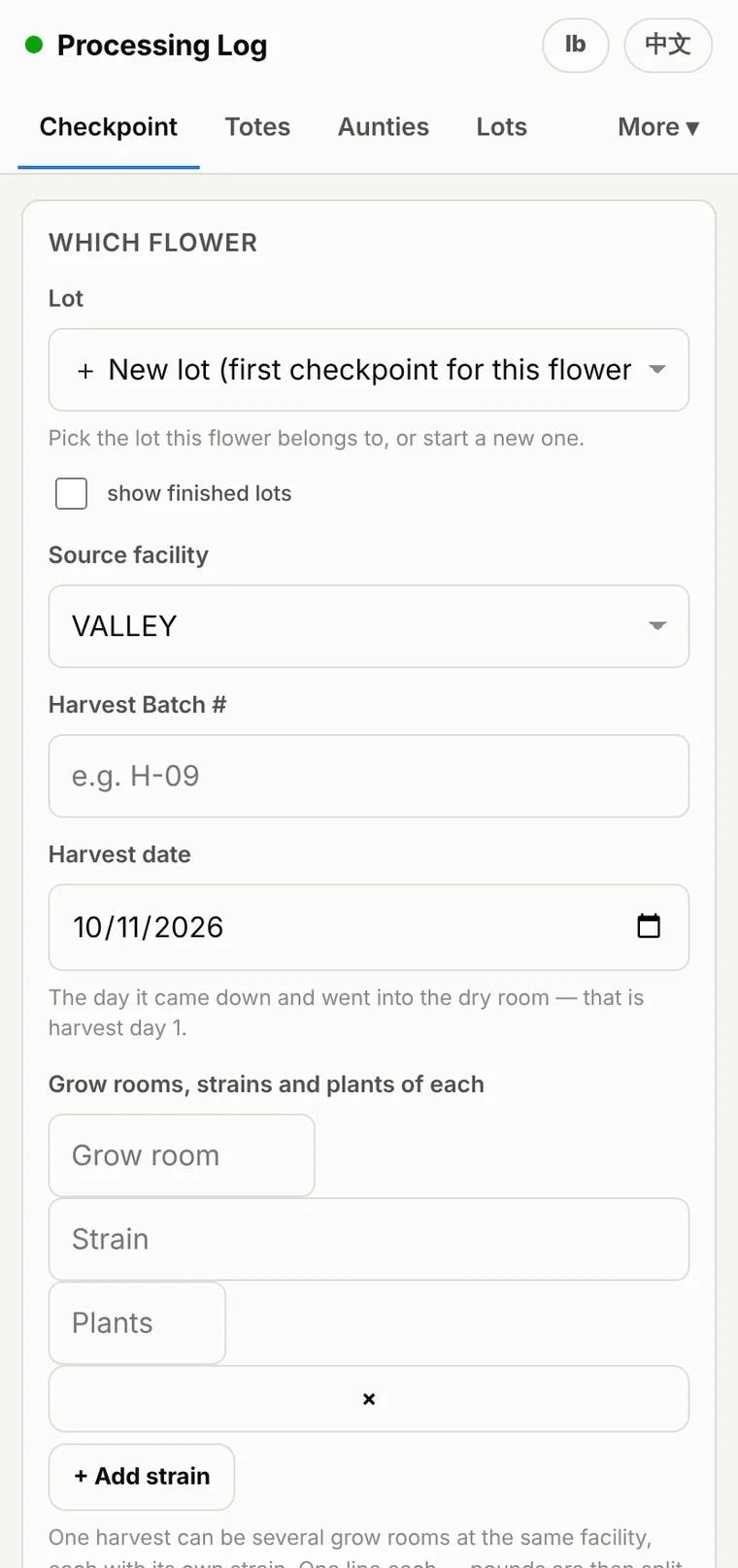
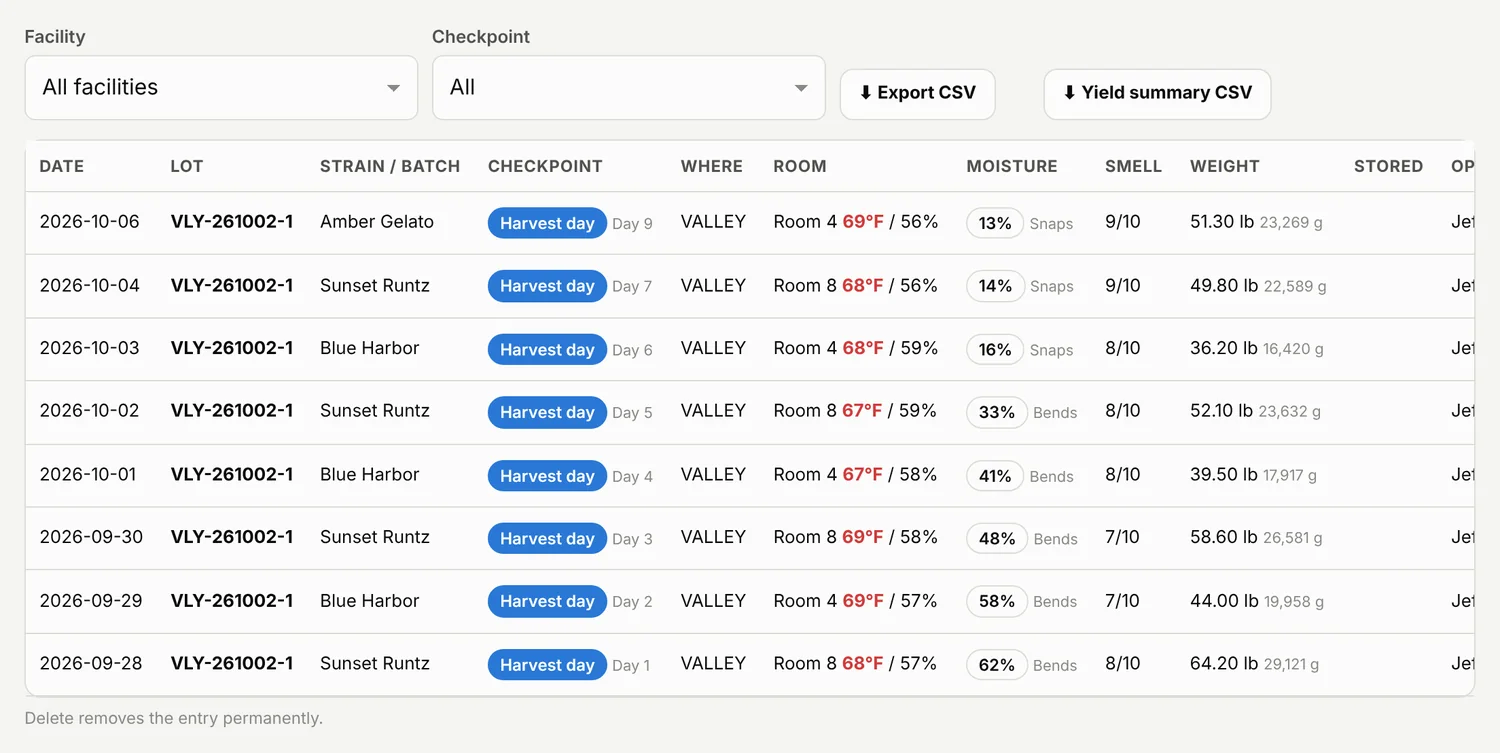
Smell, moisture, weight and notes at each stage, with photos attached to the checkpoint. Weights in pounds or grams — type either, the app shows both.
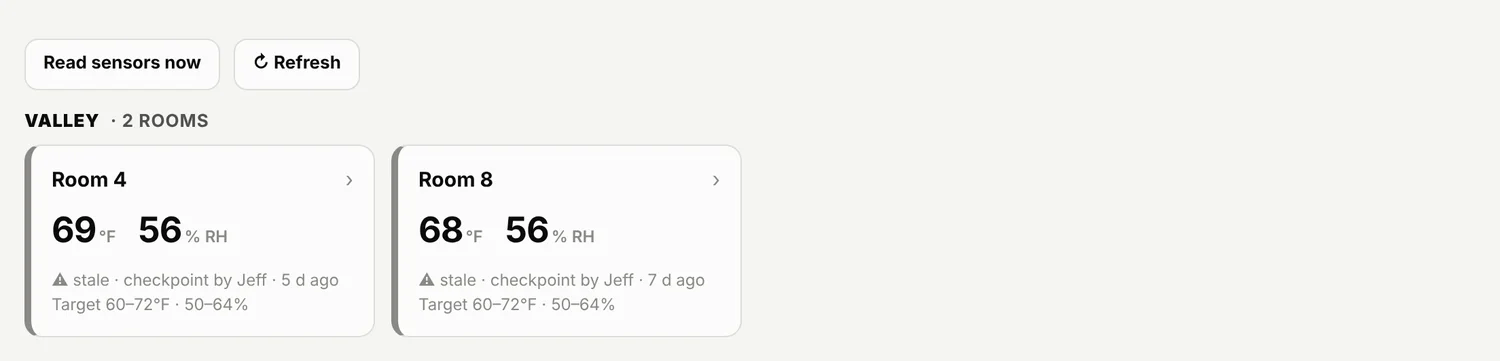
Rooms are watched against the target range you set for each one, and drying days are counted on their own, every day, without anyone having to remember.
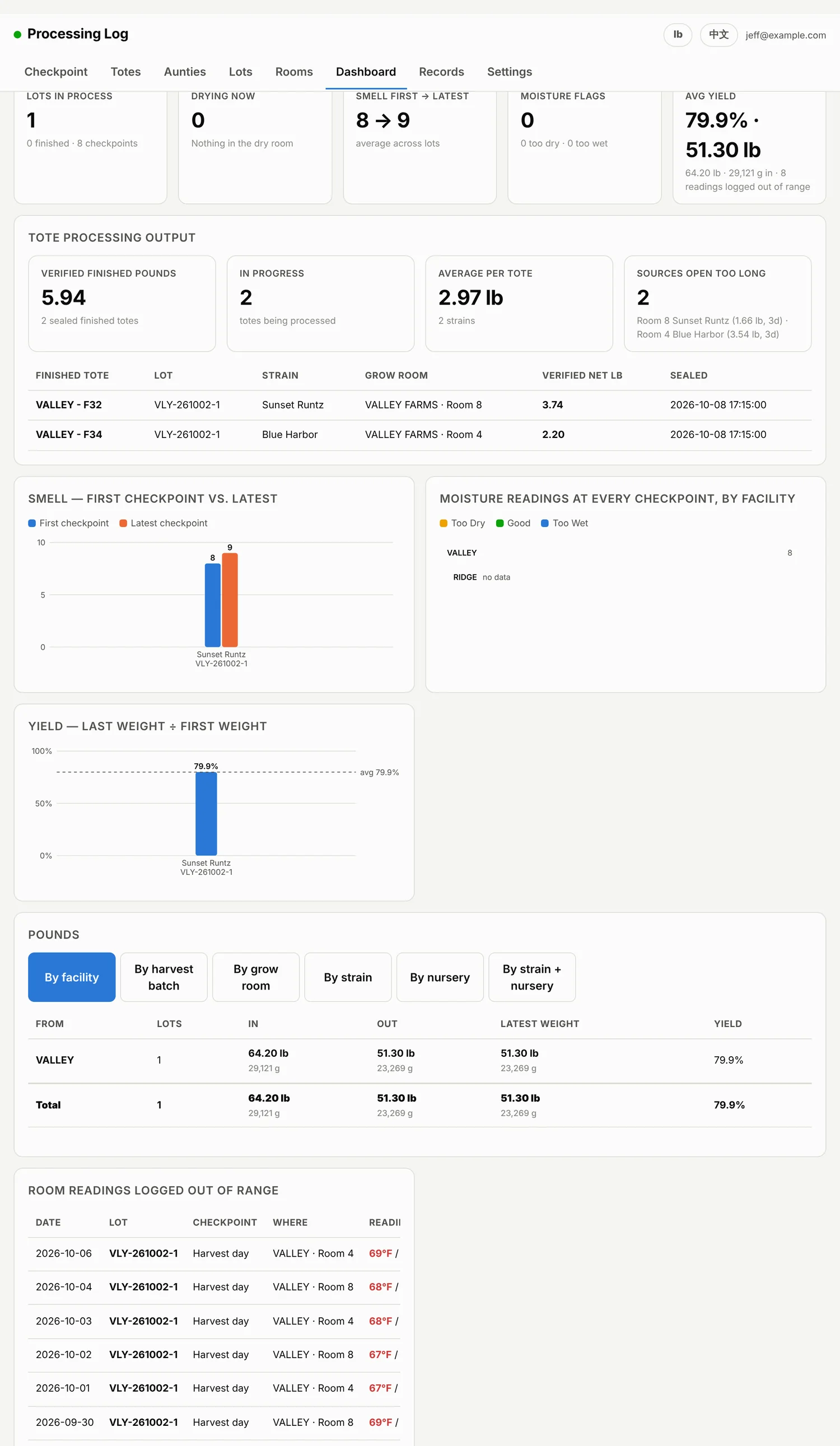
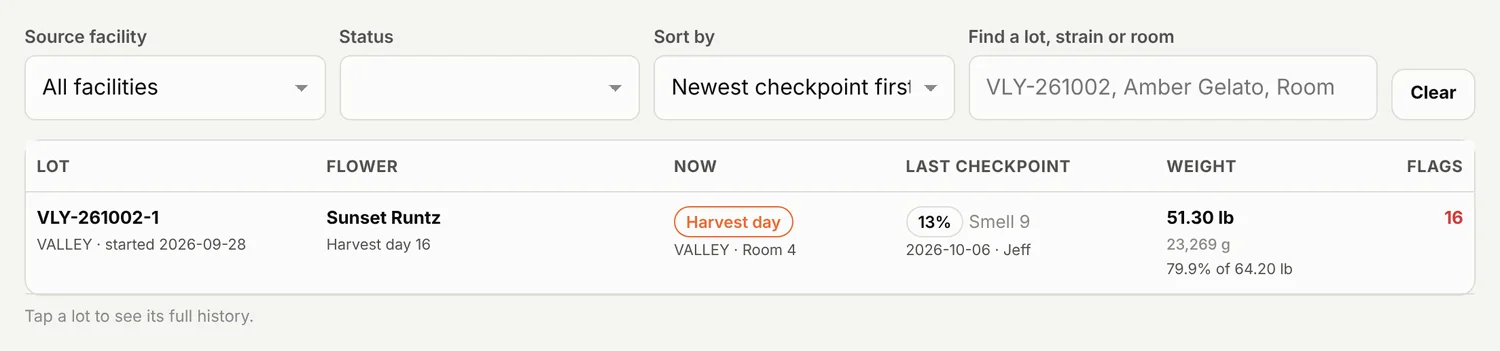
Lots in process, what is drying, smell trending from first checkpoint to latest, verified finished pounds, and the yield for every lot.
Pounds in and out by facility, harvest batch, grow room, strain or nursery — whichever way you need to look at it this week.
Every screen is built for a phone first, because that is what is in the room. Add it to the home screen and it opens full screen, like an app — nothing to install, nothing to buy.


Nothing is a dead end: every number on every screen traces back to the checkpoint, the tray or the scale reading it came from.


Each job gets its own link, opening straight to the work — no training needed, and no way to wander into someone else's numbers.
It runs in the browser on the phone that is already in the room. Add it to the home screen and it opens full screen, like an app.
The whole app in both, switched from any screen. A person can be set to open in Chinese every time they sign in.
Separate links per job, per-person control over which tabs they see, and whether they see pound figures at all.
Every correction is written to an activity log — what changed, when, and who did it. Weights are corrected, never silently overwritten.
Each one keeps its own flower, people and numbers separate, while the office sees all of it in one place.
2×1 thermal labels for tote tare, client totes and scannable tote QRs, printed at exactly the right size.
Send a note and we will walk through it together — your rooms, your strains, your crew.
Ask for a walkthrough